Showing posts with label Africa. Show all posts

Friday, May 1, 2015

One of every six species are extinguished by a climate change


Whatever you do politicians in their summits against climate change, a good part of the planet s species are already doomed to disappear. A review of recent studies that have analyzed the relationship between global warming and biodiversity shows that, in the worst-case scenarios, one of every six species of plants and animals will become extinct. Although the debacle will affect all branches of the tree of life, geographically primed with South America and Oceania.

The most recent reports of the Intergovernmental Panel on Climate Change (IPCC) draw a series of scenarios for the end of the century, calls the trajectories of concentration representative (CPR). The final destination of each trajectory is a certain concentration of carbon dioxide and, as a greenhouse gas that is, a temperature increase associated. Based on the current situation, where we have exceeded the figure of 400 parts per million (ppm) of CO2, the most optimistic scenario (the RCP 2.6 ) presents a global mean temperature increase of 2o. Other more realistic scenarios, encrypted the increase of global warming between 3º and 4 º, CPR scenarios 6.0 and RCP 8.5 respectively.

How will this rise in temperature to the ecosystems? How do different species will have the ability to adapt to global warming? What living beings are more vulnerable? These are some of the questions that many biologists and ecologists are trying to respond since it began to talk of climate change, at the end of the last century. Now, the biologist from the University of Connecticut (USA), Mark Urban, has collected more than a hundred studies focusing on the connection between global warming and species extinction. There are a couple of species and there are those who exceed the 24,000 . The results of this review are not very optimistic.

The damage that climate change is doing to the biodiversity has many faces. The same temperature rise that reduces the natural habitat of the polar bear is stressing you out to many amphibian species of the tropical rainforests. In the areas of Mediterranean climate, always on the verge of desertification, an extra degree of temperature is already quite a challenge for animals and plants. In the temperate zones, the advancement of spring this unseating many species that had paired his destiny to that of the flowering and fruiting of trees.

Where it is if there are differences in the geographical distribution of the extinctions. Although the disappearance of species will be a global phenomenon, the majority of the studies analyzed reveal that the most affected areas are South America, Australia and New Zealand. The impact will be less in the northern hemisphere. But, as regrets Urban, has not found too many studies for the case of Asia and even less for Africa.

The map shows how marine ecosystems in the tropics and Antarctica are those that have the greatest risk of extinction.


"My study cannot determine the exact reasons for these regional differences," explains this expert in evolutionary biology. "However, South America, Australia and New Zealand harbor many species with limited distribution, which implies that already have reduced habitat that could disappear more easily," he explains. In the case of the last two, in addition, its insular character assumes that the species most dynamic may not move to other areas as warming alters its original ecosystems.

Thursday, November 13, 2014

"In Europe we are treated like animals because we scare"


In the Center for the detention of foreigners (ICD) from Barranco Seco, Gran Canaria, have enabled the dining room to the immigrants who arrived last week to a beach of Maspalomas (Gran Canaria) can tell his odyssey. It is a cold room, with tables and elongated banks at his feet. It is reached by a long corridor, prison aspect, however, he was the center was a former prison. Since that stay have what he has experienced the past November 5 , when remained lying in the sun on the sand during five hours without being cared for by fear that any of them could have been infected with Ebola. "It seemed that the, be fearful, why do we deal with in Europe as animals? ", says one of them with their eyes wide open. To its side, the companions of voyage seated resigned.

Vicky explains that when he came out of there heading to Europe had not yet reached the disease. And by the way spent two years in Morocco before stepping onto the patera path of Spain. Arrived to Gran Canaria and is now in the ICE without believing that the van to repatriate: "They say we are going to eject, but to my other Africans who have been did not speak to me from this prison," he says.

In the revision that passed the medical returned to meet with masks although none had fever or symptoms of disease, such as was written in the previous reviews. The judge that it took them declaration in San Bartolomé de Tirajana, met through a window, to six meters away. This pregnant and feared catching, distrustful of official information.

The Detention Center of Barranco Seco has an index of expulsion relatively low, after the maximum period of stay legal, that is 60 days. Only a quarter of those who arrive (26.4 %, according to police sources) are sent back to their countries. Another judge, which protects the CIE, Victoria Rosell, requests reflect on "whether that percentage less than 30% of expulsions effective makes necessary the deprivation of liberty or if in many cases can be avoided".

Wednesday, November 12, 2014

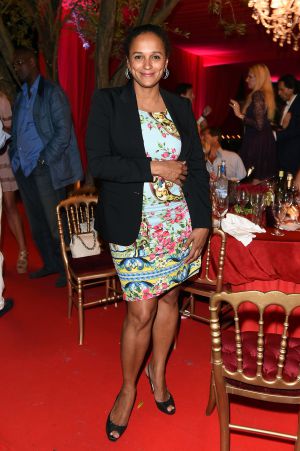
African queen and empress of Portugal

There are problems with chieftains to fill a taxi of relatives and others who need a stadium. Isabel dos Santos is the latter. The soccer World Cup Brazil was 600 guests.

They say that to your wedding with Sindika Dokolo, profession art collector (and son of a businessman from diamonds), visited 800 diners, including a handful of African presidents. They say it is the richest women of Africa, and the Forbes magazine confirmed this last year, although the volume of your wealth is difficult to count - between 2,000 and 4,000 million euros, according to western inquiries- because, say what you will, through the mouth of the little girl in the eyes of his father has never come out.

For then, Isabel he had spent five years with their first business, a bar. But it was not with a night club in the bay of Luanda as Dos Santos has become the richest women of the black continent. The benefits of the glasses are not to possess, in 15 years, banks, cement, televisions, gas stations or launch, this week, a takeover bid of 1,200 million just to buy the voting rights of Portugal Telecom SGPS Brazilian operator in the OI.

The socialist ideology that learned Eduardo dos Santos in the USSR it lasted until the end of the nineties, in the death throes of the civil war, when he had already almost two decades at the forefront of the nation. Then embrace capitalism and began to sign concessions to foreign private capital for the exploitation of mines, and telephone banks, a virgin market in a country with inexhaustible natural resources.

Portugal remains small for the few, but large, local entrepreneurs, and Americo Amorim. The king of the world sees cork in Angola an opportunity for new business. The indent is repeated, the presidency of Angola gives license to a private bank, the BIC. Amorim and puts the money in the shareholding, with a 25 %, Isabel dos Santos. Also as usual, just bad, and finally Amorim sells you your party to the Angolan, which already has 42.5 % of the country's largest bank. Consolidated in Angola, and with real money, you can now make the leap to other African countries (this in Namibia) and Europeans. Dos Santos owns 20% of the Portuguese BIS.